You win or lose a potential customer's attention in the first three seconds. This is a core challenge for every founder: creating a video that connects instantly, before someone scrolls past. To grab the attention of your ideal customer, you need to communicate value with strategic clarity, not just flashy effects.
🚀 Key Takeaways
-
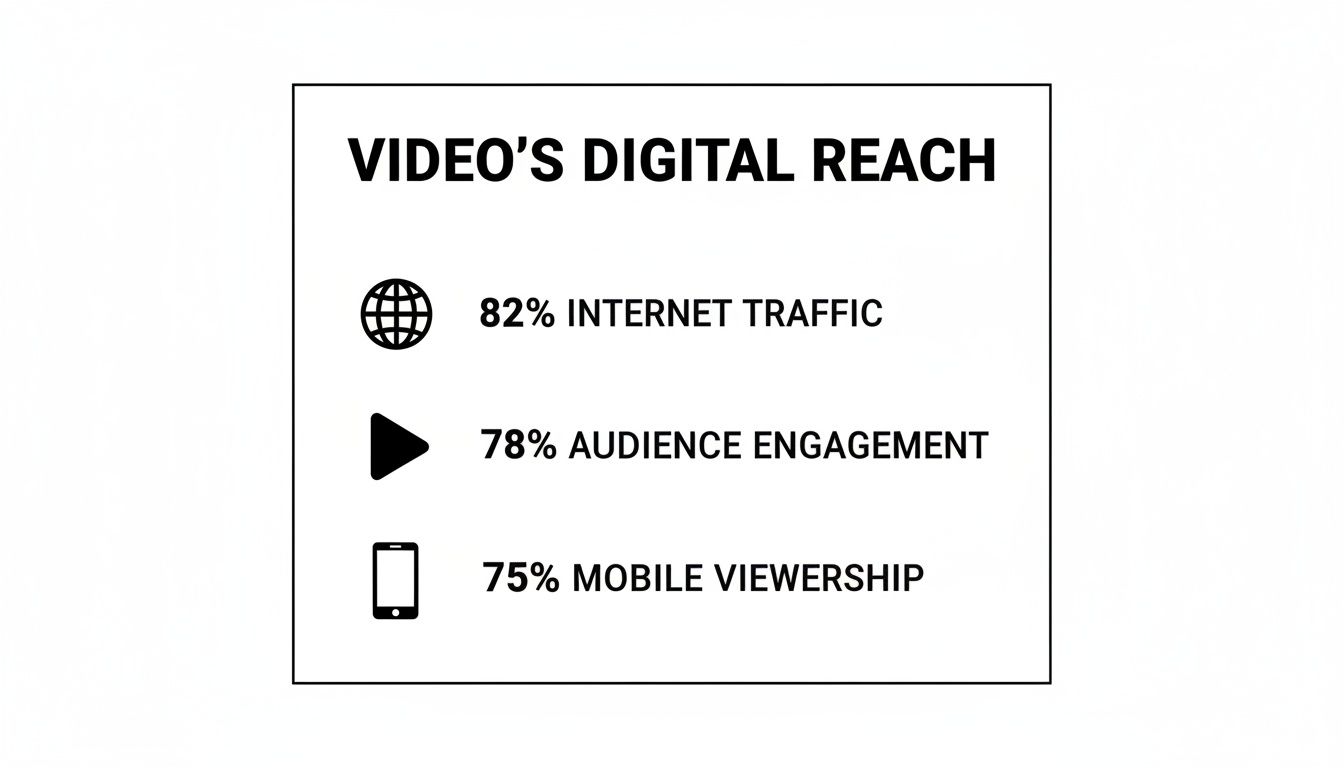
The 3-Second Rule: SaaS videos must address the user's specific pain point immediately to combat the reality that video accounts for 82% of all internet traffic.
-
Production Efficiency: Traditional agencies and DIY tools often force a choice between high cost or low quality; Forgeclips provides a systemized alternative that balances both.
-
Multi-Format Reach: ROI is maximized when a single core video is distributed in 16:9 (web), 1:1 (social), and 9:16 (mobile) formats to meet customers where they are.
Why This Type of Video Matters
In the crowded world of B2B software, a potential customer’s time is your most precious asset. Many SaaS videos fail because they don’t respect this reality. They open with long logo animations, vague marketing fluff, or slow pans of an empty office, burning through the critical moments when a viewer decides whether to stick around.
The problem is a misunderstanding of intent. A viewer on your landing page or scrolling through LinkedIn is not there to be entertained. They are looking for a solution to a problem they have right now. Your video's one job is to prove, immediately, that you understand their pain and have a credible answer.
A weak video opening leads to higher bounce rates, kills social media engagement, and wastes ad spend. When your video fails to connect, the resources you poured into production and distribution are lost. The goal isn't just views; it's meaningful engagement that leads to demos, trials, and customers.
The Undeniable Shift to a Video-First World
The importance of video is not just growing; it has become the dominant way people consume information. Projections show that video will account for 82% of all internet traffic, with mobile consumption making up 75% of total views. You can review the video marketing statistics for the full picture.
This data highlights a fundamental shift. A strong opening is no longer a "nice-to-have" for SaaS companies. It’s a requirement for survival and growth in a crowded market.
Common Approaches (Without Judgment)
When it's time to create a video, founders typically face three common paths, each with its own set of trade-offs.
Agencies
Hiring a full-service video agency offers access to a team of creatives who handle everything from scripting to the final cut. The quality is often exceptional. However, this approach comes with a high price tag and long timelines. Agency projects can cost tens of thousands of dollars and take months, which is often too slow for a startup that needs to test messages and iterate quickly.
Freelancers
Hiring freelancers provides more flexibility and is more budget-friendly. You can find talented editors, motion designers, and scriptwriters for a specific job. The challenge is that managing freelancers becomes a job in itself. Founders can spend significant time coordinating the project, writing briefs, and providing feedback, which takes focus away from core business activities like product development and customer conversations.
This frustration leads many founders to DIY template tools. They are inexpensive and offer direct control. The problem is that templates often prioritize generic visuals over clear, strategic storytelling. You can waste hours wrestling with clunky interfaces, only to produce something that looks decent but fails to connect with your audience or explain why your product matters.
Cost & Time Reality Check
Each of these options forces a compromise between cost, speed, and quality. The real issue is opportunity cost. Every hour a founder spends managing video production is an hour not spent talking to customers, refining the product, or focusing on distribution.
While agencies deliver premium quality, the investment in time and budget can be substantial. Freelancers offer a middle ground, but the management overhead can quietly drain a founder's most valuable resource: their time. DIY tools are fast and cheap but often result in a video that doesn't effectively communicate value, leading to wasted effort.
How Forgeclips Solves This
This is where a different approach becomes practical. A systemized video service like Forgeclips is designed to address these specific trade-offs for early and growth-stage SaaS companies. It provides a way to get a production-quality result for a fraction of the cost and time of traditional methods.
The focus is on speed, consistency, and reusability. By using proven frameworks, you can create a high-quality video asset quickly, allowing you to dedicate your time and budget to what matters most: distribution. It's about achieving a professional outcome without the steep costs and delays that hold startups back.
Example / Use Case
To grab the attention of a potential SaaS customer, the first few seconds of your video must connect with a specific problem, a surprising fact, or a goal your audience cares about. This is about using proven frameworks to make a viewer feel understood from the start.
The Problem-Agitation Hook
This is one of the most reliable ways to start a SaaS video. You begin by calling out a clear problem your ideal user faces. Then, you agitate that pain point just enough to make it feel urgent. It works because it validates the viewer's frustration and positions your product as the solution.
For example, a project management tool could open with: "Tired of chasing updates across Slack, email, and spreadsheets? Deadlines are slipping because information is scattered." This resonates with anyone struggling with disorganized team communication. A great hook is only as good as the script that follows, which you can learn more about in our guide on how to make a script.
The Surprising Statistic Hook
People are wired to pay attention to unexpected data. A startling statistic can reframe a problem and create immediate curiosity. This works best when the number is directly tied to the value your SaaS delivers.
A fintech app for small businesses could use this hook: "Did you know the average business loses $1,200 a year to hidden bank fees? That's money you've earned, just vanishing." This creates a clear, quantifiable problem that needs a solution. You can find more examples by exploring our collection of the best SaaS product videos.
A Distribution-First Mindset
A common mistake is pouring an entire budget into creating one perfect video, with nothing left for getting people to see it. A great video's value is only unlocked through distribution. To truly grab attention, you need to think about where and how your video will be seen from day one.
This means shifting from a production-first to a distribution-first mindset. The goal is not a single, expensive masterpiece. It's building a core video asset that can be adapted and deployed across every channel where your customers spend their time. When you save time and budget on production, you can focus on promotion.
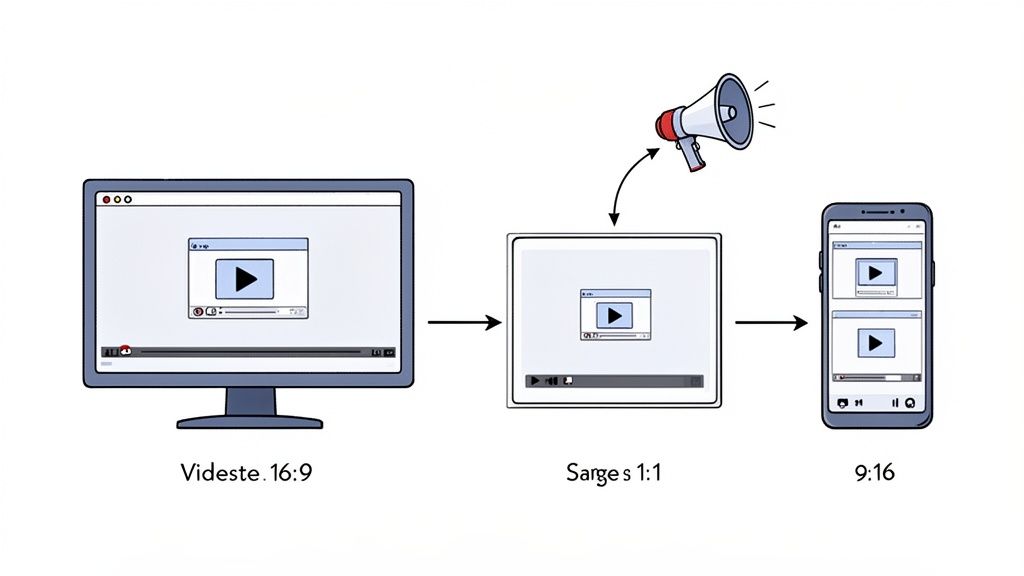
A single video file is no longer sufficient. A distribution-first strategy means planning for multiple aspect ratios from the start so your video feels native on every platform.
-
16:9 Widescreen: Your primary format for your website, YouTube, and embedded product demos.
-
1:1 Square: Ideal for social feeds like LinkedIn, where it takes up more screen real estate and stops the scroll.
-
9:16 Vertical: Essential for Stories and short-form video platforms, where it feels more native to mobile viewing.
This approach lets you embed the 16:9 version on high-converting landing pages with videos, use the 1:1 version for paid ads on LinkedIn to generate leads, and leverage the 9:16 cut for organic reach. Platforms like Forgeclips provide these formats as part of a standard delivery, simplifying the process.
Soft Call to Action
Creating SaaS videos that grab attention and drive sign-ups doesn't have to be a trade-off between speed, cost, and quality. A systemized approach offers a smarter way to produce studio-quality demos and promos without the traditional agency price tag or timeline.
Explore our video frameworks and start your project today.
Frequently Asked Questions
How long does production take with Forgeclips?
While traditional agencies often take months, Forgeclips is designed for the speed of SaaS. Our systemized workflow typically delivers production-ready assets in a fraction of the traditional timeline.
Template tools prioritize generic visuals. Forgeclips focuses on strategic storytelling and proven frameworks that actually solve the "3-second attention" problem, ensuring your video communicates high-level value instantly.
Yes. Forgeclips delivers assets in 16:9 (web), 1:1 (LinkedIn/Social), and 9:16 (Mobile/Stories) as a standard, so you have a distribution-ready library from day one.