As a founder, you know your product inside and out. But explaining its value in a way that clicks instantly with a new visitor is a huge challenge. A product marketing video is your solution. It’s a short, focused asset that translates complex features into a clear, tangible outcome for your customer.
This guide is for SaaS founders who need a practical way to create a video that builds trust and drives sign-ups, without the typical agency costs or timelines.
Why This Type of Video Matters
Static screenshots and feature lists rarely capture the real experience of using your software. They tell a visitor what your product does, but not how it will make their life better. This is where a well-crafted product marketing video becomes a core growth asset, not just another piece of content.
Its job is to close the gap between abstract features and concrete benefits. A video can walk someone through a workflow, highlight a key outcome, and deliver that "aha!" moment far more quickly than text ever could. This clarity is critical for smoothing out friction in your sales funnel and helping potential customers see the value right away.
Building Trust and Driving Conversion
For any SaaS startup, trust is the most important currency. A professional promo video or product demo sends a clear signal: you have invested in your user's experience and are confident in what you have built. It offers a transparent look inside your platform, answering a visitor's biggest questions before they think to ask.
That clarity leads directly to better conversion rates. When a user understands what your product does and how it will improve their work, they are far more likely to take the next step. A great video doesn’t just show features; it shows a better future. It helps the customer visualize their own success, making the decision to sign up feel natural and logical.
A single product marketing video also becomes a flexible asset. You can use it across the entire customer journey, not just on your homepage. With minor edits, you can repurpose it for social media, paid ads, or email sequences. By thinking about the different types of video you can create, you can build a library of assets that supports growth at every turn.
The Script: Your Blueprint for a High-Impact Video
A great product marketing video starts with a plan, not software. Before you think about animation or screen recordings, the script is where you win or lose your audience. For founders, the goal is not a cinematic masterpiece but clear communication of value. Your script is the blueprint for that clarity.
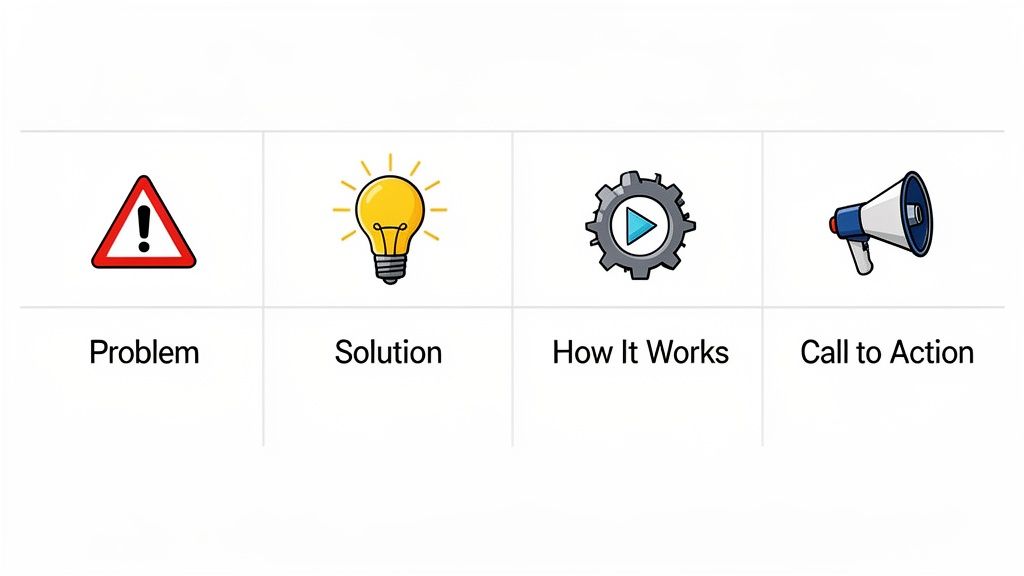
The best scripts are direct, customer-centric, and respect the viewer's time. A simple four-part framework works exceptionally well for SaaS products: Problem, Solution, How It Works, and Call to Action. This structure forces you to focus on what the customer actually cares about.
Define Your One Big Idea
Before writing, you must identify the one thing you want a potential customer to remember. What is the core outcome they will achieve? This is not a list of features. It is the headline benefit. Is it "save an hour every day on reporting" or "never miss a critical lead again"? Pick one.
That central idea becomes your north star. Every line in your script and every visual must reinforce that single message. Trying to cram five different value props into a 90-second video just creates noise and kills your impact. The video's job is to get the viewer so interested in the primary outcome that they feel compelled to learn more.
A Simple Framework That Works
With your core message locked in, you can structure your script around a narrative that resonates with a business user's mindset. It is about making a logical argument for why your solution is the right choice.
Here is how to break down the four essential parts:
The Problem: Start by describing a pain point your ideal customer experiences daily. Use their language. Acknowledging their frustration shows you understand their world and builds instant rapport.
The Solution: Introduce your product as the clear answer to that specific problem. Frame it as the new, smarter way to solve the issue you just laid out.
How It Works: Briefly show your product in action. Focus on just two or three key screens or workflows that directly deliver on your promise. Do not give a full tour; show the magic moments.
The Call to Action (CTA): Tell the viewer exactly what to do next. Be direct. "Start your free trial" or "Book a demo today" are strong, unambiguous commands that provide a clear path forward.
Write for the Ear, Not the Eye
Writing a video script is different from writing a blog post. You must write for the ear, which means using shorter sentences and a conversational tone. Read every line out loud. If it sounds stiff or formal, rewrite it until it sounds like something a real person would say.
Aim for about 120-150 words per minute of voice-over. A 90-second video script should be around 180-225 words. This forces you to be concise and lets your visuals do some of the heavy lifting, which is especially true for SaaS explainer videos where the UI is the star. Use pauses to let important points sink in.
Common Approaches (Without Judgment)
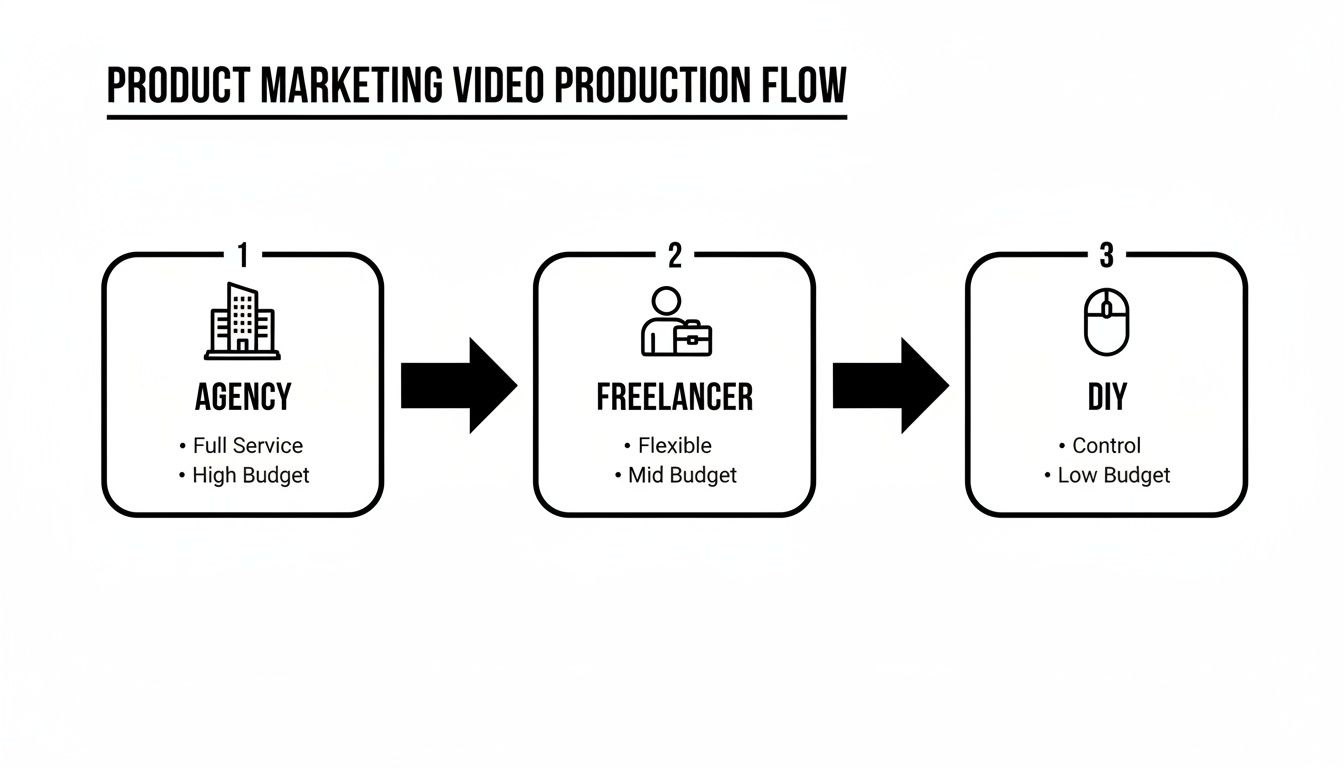
Once you decide to create a product marketing video, the question becomes how to get it made. Most founders face three common paths, and each comes with different trade-offs in cost, time, and involvement. Understanding them helps you match your video strategy to your startup's current stage.
Working with a Video Agency
Agencies bring a team of specialists who handle everything from scripting and storyboarding to animation and sound design. This can be a good choice for a well-funded, later-stage company that needs a high-concept video for a major campaign. The result is typically polished and professional.
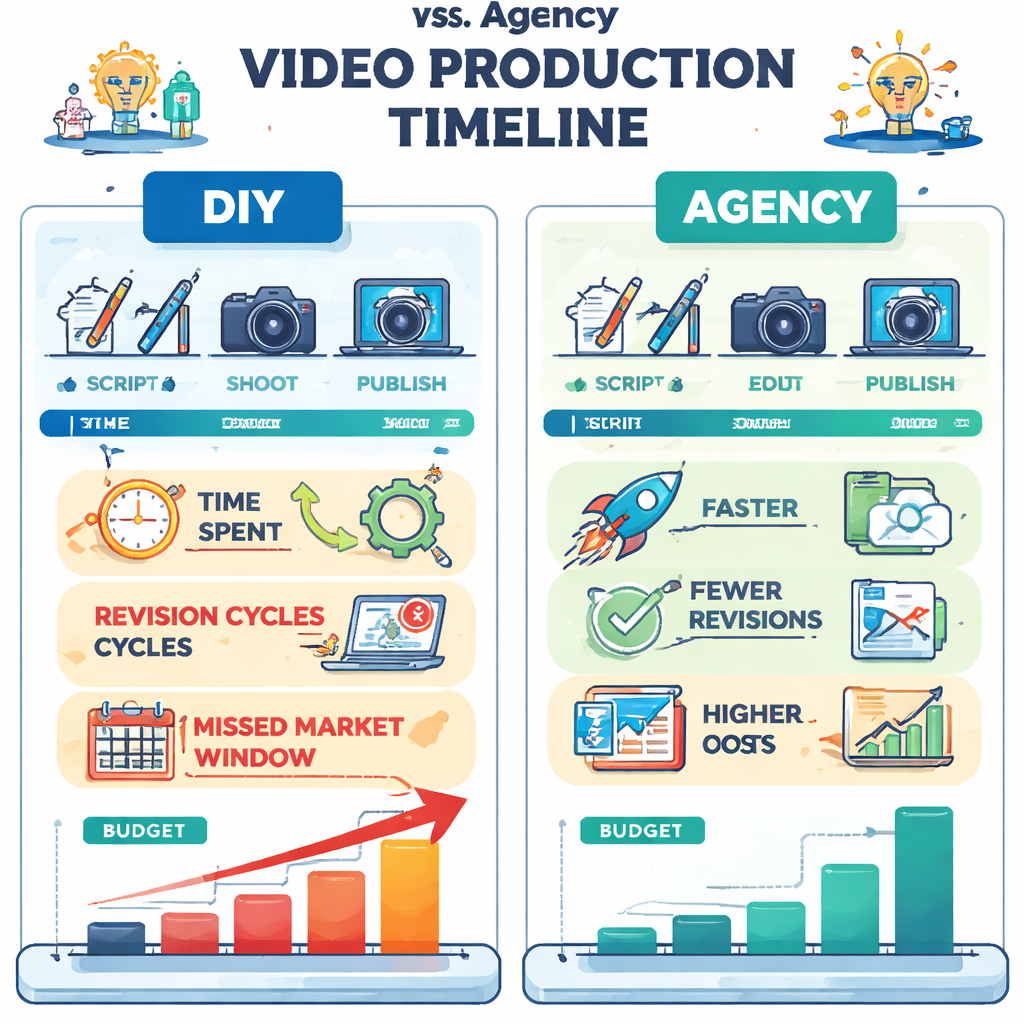
This all-in-one service comes with a significant price tag. A professionally produced animated explainer from a good agency can run from $10,000 to $30,000 or more, with a timeline of 6 to 12 weeks. For an early-stage founder, this can be a substantial cash burn and a long wait for a critical marketing asset.
Hiring Freelance Talent
A more hands-on approach is to assemble a team of freelancers, such as a scriptwriter, a motion graphics artist, and a voice-over actor. This path offers more control over the budget and can be less expensive than a full agency. You get to direct the project and ensure it aligns with your vision.
The hidden cost here is your time. Managing multiple freelancers, providing feedback, and coordinating handoffs is effectively a part-time project management job. A founder's time is a startup's most valuable currency. Every hour spent managing video production is an hour not spent talking to customers or building the product.
The DIY and Template Route
DIY tools and templates appear to be an ideal solution at first. For a small monthly fee, you get software that lets you create your own video. This is a practical option for internal training videos or quick social media updates where polish is not the primary goal.
However, creating a professional product marketing video that converts requires a strong sense of pacing, visual hierarchy, and storytelling. What begins as a "cheap" option can quickly consume dozens of hours of your own time, often resulting in a video that looks generic and fails to connect with your audience.
Cost & Time Reality Check
The true cost of video production is not just the invoice. It is the opportunity cost. Every week you spend stuck in a lengthy production cycle is a week you are not distributing your message, learning from customer feedback, and iterating on your approach. In a startup, speed is your primary advantage.
The longer it takes to get your video live, the longer your website operates without its best salesperson. A slow process delays your ability to see which messages resonate with real people. A modern approach prioritizes getting a high-quality video into the market quickly, so you can shift your time and budget from production to distribution, where the real return is generated.
How Forgeclips Solves This
For startups needing that balance of speed, quality, and cost-efficiency, a different model is required. The goal should be to make video production a repeatable, scalable system, not a one-off, time-consuming project.
Solutions like Forgeclips offer a practical way forward. The focus is on delivering a professionally structured video quickly, freeing you up to concentrate on growth. This approach provides production quality that achieves about 90-95% of a custom project's result for a fraction of the cost, with a finished asset ready in days, not months. You can see some SaaS explainer video examples built with this mindset.
Example Use Case: A SaaS Scheduling Tool
Imagine you have built a SaaS tool that helps consulting firms manage client appointments and reduce no-shows. Your target audience is busy, and they need to see the value immediately. A 90-second product marketing video on your homepage can make all the difference.
The video opens by showing the familiar frustration of manual scheduling and back-and-forth emails (The Problem). It then introduces your tool as the streamlined, automated solution (The Solution). Next, it shows a clean screen recording of a user creating a booking page and sending a link to a client in under 30 seconds (How It Works). Finally, it ends with a clear CTA to "Start your 14-day free trial."
This simple, clear narrative helps a potential customer instantly understand how your tool solves their problem. It builds enough trust and confidence to get them to take the next step, turning a passive visitor into an active trial user.
Adopting a Distribution-First Mindset
Creating a powerful product marketing video is a significant accomplishment, but it is only half the job. A brilliant video that nobody sees has an ROI of zero. Founders often fall into the trap of pouring their entire budget and focus into production, leaving distribution as an afterthought.
A distribution-first mindset flips that script. Every dollar and hour saved on production is a resource you can reinvest into getting your video in front of the right people. Efficient creation does not just cut costs; it buys you the runway to test, learn, and market your video. This strategic shift moves the goal from "making a great video" to "getting a great video seen by potential customers."
Where Your Video Will Do the Most Work
Once your video is ready, placing it strategically across different channels is key to unlocking its impact. Each location serves a unique purpose in your customer's journey.
Here are the most effective channels for a SaaS video:
Your Website Hero Section: This is your prime real estate. An explainer video above the fold on your homepage acts as a 24/7 salesperson, instantly communicating your value and boosting conversion.
Paid Ad Campaigns: Short, punchy versions of your video are perfect for platforms like LinkedIn and YouTube. They allow you to target your ideal customer profile and drive qualified traffic to your landing pages.
Email Onboarding Sequences: A welcome email that includes a quick product demo can dramatically improve new user activation. It shows them how to get started, reducing friction and helping them find value faster.
Video is central to how people consume information. Forecasts suggest it will account for roughly 82% of all internet traffic by 2026, with short-form content leading the charge. This trend, highlighted in recent short-form video statistics, makes a well-placed product marketing video more essential than ever.
Maximizing Reach with Multiple Formats
A one-size-fits-all approach to video distribution is ineffective. A video that looks perfect on your website will be awkwardly cropped in a social media feed. To get the most out of your asset, you need to prepare versions in various aspect ratios so your video looks native to every platform.
This small adjustment shows a level of polish that builds trust and signals that your content was made for the viewer. Modern production solutions can simplify this. For instance, a service like Forgeclips can automatically provide your video in multiple formats, ready to deploy for campaigns like YouTube ads, where format flexibility is key.
Video Format Checklist for SaaS Distribution
Format (Aspect Ratio)
Primary Channels
Key Considerations
16:9 (Widescreen)
Website Hero, YouTube, Email, Landing Pages
The standard horizontal format. Ensure key visuals are centered to avoid issues if cropped.
1:1 (Square)
LinkedIn Feed, Instagram Feed, Facebook Feed
Optimized for mobile scrolling. Text overlays and subtitles are crucial as many users watch with sound off.
9:16 (Vertical)
Instagram Stories, TikTok, YouTube Shorts
Designed for full-screen mobile viewing. Your message must be delivered quickly, often in the first 3-5 seconds.
By adopting this distribution-first mindset, you recognize that the true value of your video is not just in its creation, but in its ability to consistently reach, engage, and convert your target audience.
Soft Call to Action
Creating a polished, high-performing product marketing video does not have to involve agency-level costs or timelines. By focusing on a clear script and a distribution-first mindset, you can create an asset that works for your business around the clock.
If you are looking for a practical way to produce a studio-quality video in days, not weeks, explore how a streamlined process might fit your needs. See how it works.