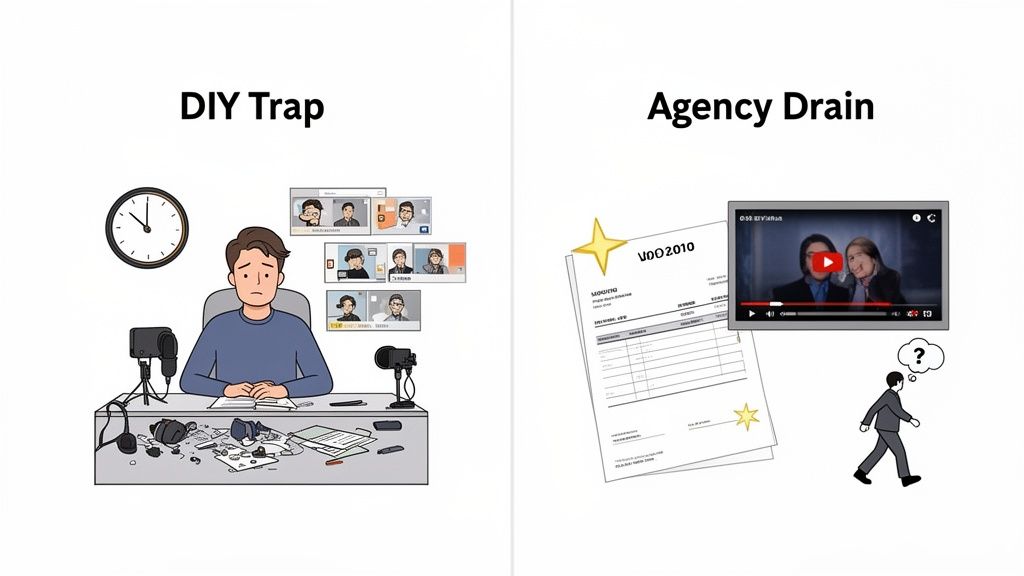
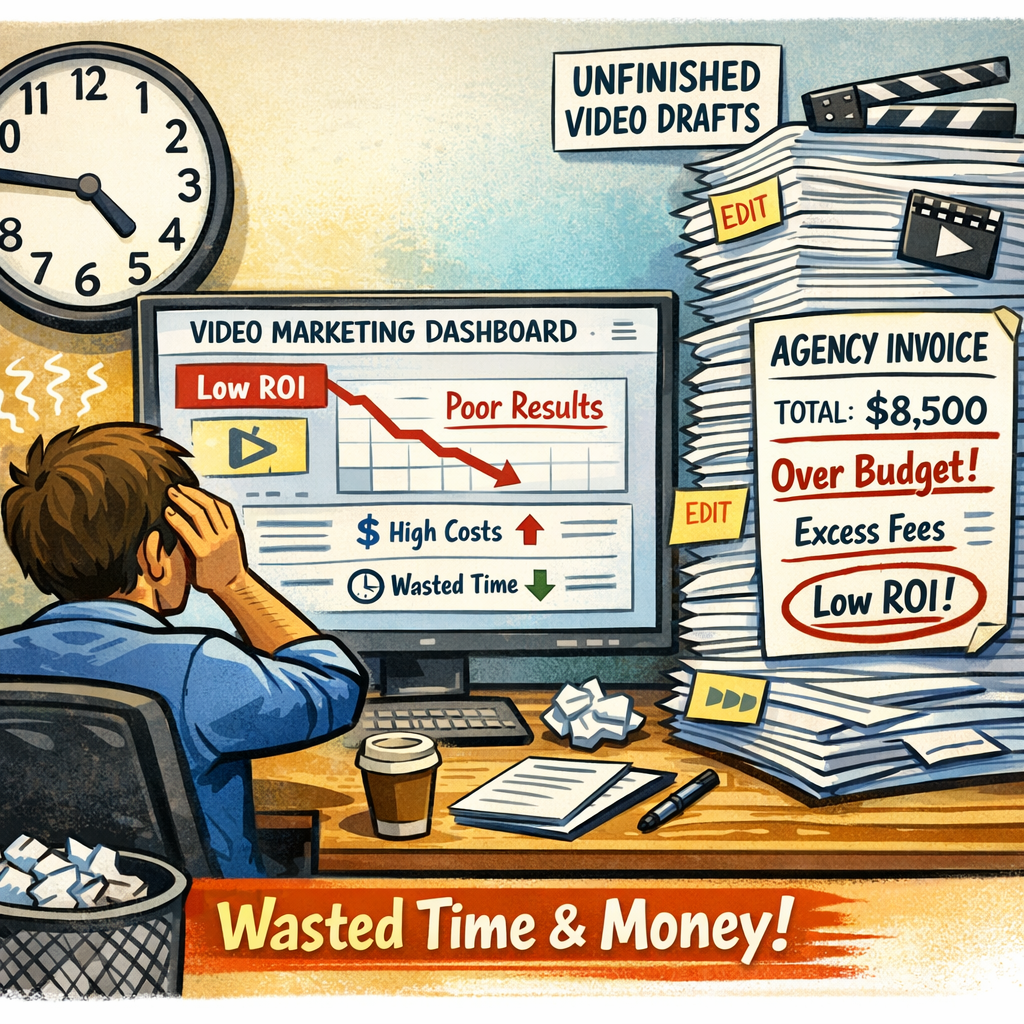
Another hour wasted trying to edit a screen recording. Or worse, you just got a five-figure quote from a video agency for a 90-second explainer. Creating a great video for your software often feels like choosing between two terrible options: the "DIY Trap" or the "Agency Drain."
Effective SaaS video production delivers structured clarity that drives user action. It requires a framework-based approach that balances speed, cost, and quality, moving beyond the slow, expensive agency model and the messy, time-consuming DIY process. This ensures your video communicates value efficiently and converts viewers into users.
Why Traditional SaaS Video Production Fails
You’ve been there. You have a killer feature to launch, a landing page that isn't converting, or a constant stream of support tickets asking the same questions. The answer seems obvious: you need a video.
But what happens next is a familiar, frustrating story. You’re pushed down one of two paths, and neither leads where you need to go. This isn't just a minor inconvenience; it's a direct bottleneck to growth, wasting your most valuable resources—time and money.
The Two Failed Paths of SaaS Video Production
The struggle is real. You either take on the entire project yourself, wrestling with software you don’t know, or you hand over a massive check to an agency, crossing your fingers they "get it." Both approaches are fundamentally broken because they lack a middle ground built for the specific needs of a software business.
Let's break down the common pain points side-by-side.
Pain Point
The DIY Trap (Do-It-Yourself)
The Agency Drain (Traditional Agency)
Cost
"Free" in theory, but costs you dozens of hours of high-value founder/dev time.
Extremely expensive, often starting at $5,000-$15,000 for a single short video.
Time
Weeks of scripting, recording, editing, and re-editing. A massive time sink.
Long production cycles. 6-8 weeks from kickoff to delivery is standard.
Expertise
You're a product expert, not a video editor. The final quality often reflects this.
They're video experts, but rarely software experts. Key product value is often lost.
Outcome
An amateur-looking video that fails to build trust and may confuse users more.
A beautiful video that is often all style and no substance. It looks great but doesn't convert.
This isn’t just about making one bad video. It’s about the wasted engineering hours that could have been spent on your product. It’s about the blown marketing budget that could have funded a month of ad spend. It’s about the missed opportunity to clearly communicate your product’s value.
The problem isn’t your effort or your budget; it’s the broken process.
The core issue is a misalignment of goals. High-production fluff focuses on cinematic appeal, while cobbled-together DIY videos focus on just getting something out. Neither is focused on the only thing that matters for SaaS: structured clarity that drives user action.
A better way is clearly needed. You need a system that offers the speed and cost-effectiveness of doing it yourself but with the strategic thinking and quality of a top-tier agency. A process built from the ground up for software, not one adapted from a different industry.
After all, a great video has to grab the attention of your audience, and only a structured approach can deliver that reliably.
The Power of a Framework-Based Video Approach
So, what’s the alternative? A path that gives you the speed of DIY and the strategic quality of a high-end agency, but without the painful trade-offs. This is where a framework-based philosophy for SaaS video production changes everything. It’s about replacing chaotic improvisation with proven structure.
The core idea is simple: structure beats improvisation every single time. Instead of staring at a blank screen or a messy UI recording, you start with a battle-tested blueprint. This isn't about rigid, cookie-cutter templates. It's a flexible system built on clear storytelling principles, designed to communicate your software's value instantly.
Why Structure Wins
A framework provides a logical flow that guides the viewer's attention. It’s based on psychological principles that build trust and drive action. You're not just showing screens; you're building a narrative that moves a prospect from confusion to clarity. This is everything for a SaaS product where the 'aha!' moment is the entire point.
Imagine a user watching a demo. A chaotic video jumps between random features, leaving them overwhelmed and clicking away. A framework-based video, however, follows a deliberate path:
The Hook: It opens by articulating a pain point the viewer feels deeply.
The Solution: It presents your software as the clear answer to that pain.
The Value: It shows the specific UI and features that resolve the problem, step-by-step.
The Action: It gives a clear, compelling next step, like starting a trial or booking a demo.
This structured approach prevents the most common pitfall in SaaS video: the confusing UI showcase. Instead of a random tour of buttons and menus, every clip serves a purpose, building momentum toward the conversion goal. A solid framework is the backbone of any repeatable system, which you can learn more about in this guide to a proven video content marketing strategy.
The Logic Behind the Framework
A good framework is like a well-designed API. It has predictable inputs and outputs, ensuring your key message always lands, whether it’s for a 30-second promo ad or a 3-minute onboarding tutorial. It forces you to prioritize what matters to the user, cutting out the fluff that plagues so many agency-produced videos.
The impact of this clarity can’t be overstated. In a crowded market, clear communication is your biggest competitive advantage.
The goal of a framework isn't to restrict creativity; it's to channel it effectively. By providing a solid foundation for your story, it frees you up to focus on communicating your product’s unique value, not reinventing the fundamentals of video marketing with every project.
By following a proven structure, you ensure every second of your video works toward a specific business objective. This systematic approach is the bridge between the DIY Trap and the Agency Drain—a philosophy that Forgeclips is built on. If you want to see this in action, you can check out our explainer video script template that follows these core principles.
Your Playbook for High-Performing SaaS Videos
Enough theory. Let’s get into the actual playbook for creating SaaS videos that drive conversions. This is where we move from abstract strategy to execution, breaking down each stage of SaaS video production with grounded, real-world advice. Forget film school—this is for founders and marketers who need results, not awards.
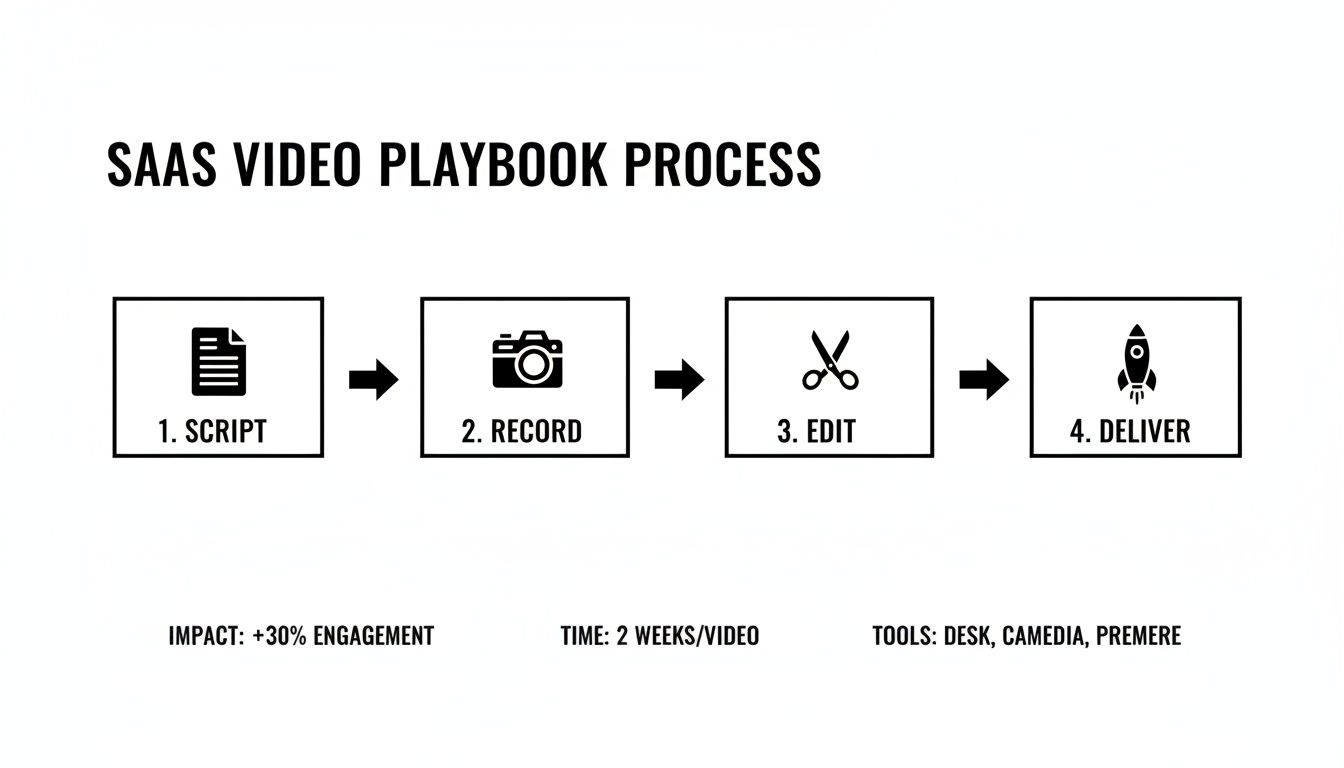
Our entire process boils down to four key stages. From a raw idea to a polished, multi-format asset ready to drive growth, here’s how we see the journey:
Let's break down each step.
Strategic Scripting: The Foundation of Conversion
A great script is 80% of the battle. You can have a beautiful video, but with a weak script, it’s just a powerful engine with no wheels—it looks impressive but goes nowhere. The goal isn't just writing down what to say. It’s about architecting a narrative that hooks a viewer and guides them to that "aha!" moment.
For software, one of the most reliable frameworks we use is a modified Problem-Agitate-Solve (PAS) model. It just works.
Problem: Hit the pain point, hard. Start with something your user feels every day. "Tired of digging through spreadsheets to find your team's project status?"
Agitate: Now, pour a little salt on the wound. Explain why it's so frustrating. "It wastes hours, creates costly errors, and leaves your stakeholders completely in the dark."
Solve: This is your moment. Introduce your software as the clear, obvious hero. Show the exact feature that makes the pain disappear. "With our live dashboard, everyone sees real-time updates instantly. No more digging."
This structure is effective because it mirrors the user’s journey from frustration to relief. It positions your product as an answer, not just another tool. Nail this story before you even think about recording.
With a locked-in script, it’s time to capture the visuals. For most SaaS videos, this means getting a clean screen recording. And "clean" is the only word that matters here. A messy recording with random notifications, irrelevant browser tabs, or a chaotic desktop will torpedo your credibility in seconds.
Here are a few non-negotiable rules we follow for every screen capture:
Use a clean browser profile. No personal bookmarks, distracting extensions, or logged-in accounts.
Prep your demo data. The app must be populated with realistic, pristine data. No "test user 123" or "lorem ipsum" placeholders. It looks lazy.
Kill all notifications. Turn them off on your desktop and in your app. A Slack pop-up mid-flow is an instant re-shoot.
Voice-over is the other half of this equation. A shaky, low-quality voice makes even the best software feel cheap. But you don't need a pro studio. Modern AI voice-over tools can produce incredibly realistic, professional-grade audio from your script, saving you a ton of time and budget.
Polished Editing: Where Clarity Is Forged
Editing is where you assemble the raw takes into a cohesive story. For SaaS, the primary goal of editing isn't flashy effects—it is to create clarity. Your job is to guide the viewer’s eye and make a complex UI feel obvious at a glance.
This is less about Hollywood magic and more about smart, practical enhancements.
Zooms and Pans: Use subtle motion to direct attention. If you're talking about the "Export" button, zoom right in on it. Don't make the viewer hunt for it.
Highlights and Annotations: Simple shapes or highlights can circle a key feature. This removes all ambiguity about where the user should be looking.
Pacing: Keep it moving. Ruthlessly cut any dead air, awkward pauses, or unnecessary mouse movements. A snappy pace shows you respect the viewer's time and keeps them locked in.
The best SaaS videos are clean, crisp, and direct. They favor a minimalist style that puts the focus squarely on the product's value.
Multi-Format Delivery: The Final Mile
Your video is edited and polished. But your job isn’t done. A single 16:9 video file is an asset, not a strategy. To get real ROI, you have to deliver that core message across every channel your customers use—and that means adapting the format.
One recording session should be designed to produce multiple assets from the start.
16:9 (Widescreen): This is your hero video for the landing page, YouTube, and product documentation.
1:1 (Square): Perfect for feeds on LinkedIn and Facebook, where it commands more screen real estate.
9:16 (Vertical): Absolutely essential for Instagram Stories, TikTok, and YouTube Shorts.
This isn’t just about cropping. It often means re-editing to fit the platform's context, like adding bold text overlays for vertical videos that will likely be watched on mute. When you plan for multi-format delivery from day one, you turn a single production effort into a full-funnel marketing machine.
How Structured Video Solves Role-Specific Headaches
A video framework isn’t some abstract creative concept; it’s a practical tool that solves real, expensive business problems. An effective video does more than just look good on a landing page—it actively reduces friction for specific roles inside your company, from the founder scrambling for ROI to the product manager drowning in support tickets.
Different roles feel different pain points. A structured approach to SaaS video production tackles each one head-on by prioritizing clarity and efficiency over cinematic fluff. This is about making video a reliable asset, not a creative gamble.
For SaaS Founders and Indie Hackers
Your most valuable resources are time and money. Every decision gets filtered through one simple question: will this drive growth? A structured video system is built for speed and ROI, designed to turn your video from a cost center into a conversion engine.
You don't have six weeks to wait on an agency or 40 hours to burn on DIY editing. You need a video for your Product Hunt launch next week. You need an asset you can A/B test on your landing page tomorrow to see if it actually moves the needle on trial sign-ups.
This is exactly where a framework delivers.
Launch and Test Fast: A system lets you produce polished, on-brand videos in hours, not weeks. This means you can create assets for launches, feature announcements, and ad campaigns without derailing your product roadmap.
Maximize Conversion: By focusing on a proven model like "Problem-Agitate-Solve," your video instantly connects with a visitor's pain points, demonstrates clear value, and drives them to act. It turns a passive landing page into an active sales pitch.
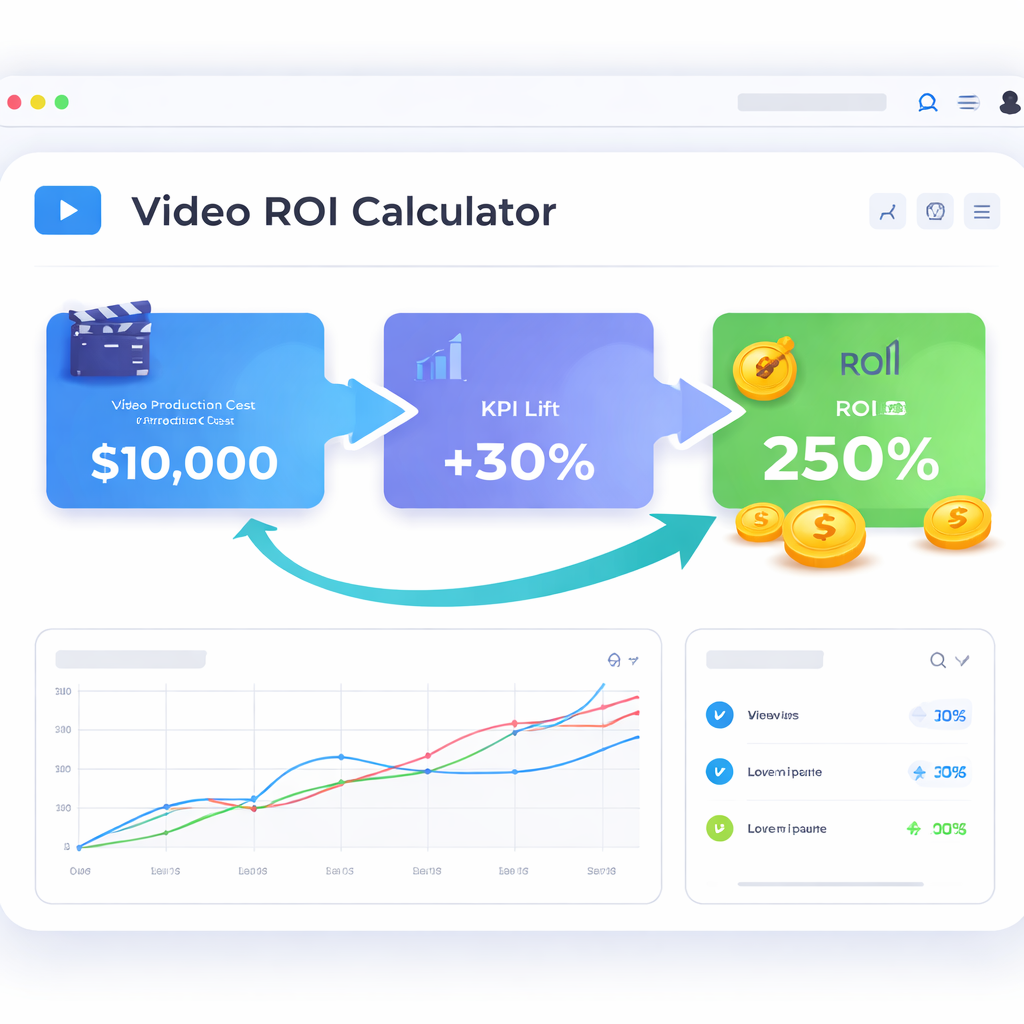
Control Your Budget: Instead of staring down a $10,000 agency invoice, a framework-based approach gives you predictable, affordable costs. This lets you produce more content and test more ideas without draining your runway.
In SaaS, efficiency is everything. Structured video is designed to improve conversion rates without the massive upfront investment.
For Product Managers and Dev Teams
Your world revolves around clarity and scalability. You're constantly fighting misaligned stakeholders, onboarding confused users, and repeating the same feature explanations over and over. Your biggest headaches are almost always caused by communication gaps.
A library of structured, clear videos acts as a force multiplier for your entire team.
Imagine embedding a crisp, 90-second feature video directly into your documentation or an onboarding flow. It doesn't just explain a feature; it demonstrates its value, preemptively answering questions and reducing the load on your support and success teams.
This is how structured video creates genuine scalability:
Reduce Repetitive Explanations: A clear demo video becomes the single source of truth for how a feature works. Share it with sales, marketing, and new hires to get everyone on the same page, fast.
Improve User Onboarding: Videos can visually guide new users through their "first run" experience, helping them hit that "aha!" moment much faster. Effective onboarding is a cornerstone of retention.
Get Stakeholders Aligned: Before a single line of code is ever written, a simple video mock-up can communicate a new feature's vision far more effectively than a dense PRD. This ensures everyone from engineering to marketing understands the goal from day one.
As teams grow and products get more complex, relying on text-based documentation alone is a losing battle. Structured video cuts through the noise, making your product and its value undeniably clear for everyone. You can dig into more data about the growth of SaaS platforms on Zylo.com to see just how massive this market has become.
The Forgeclips Approach: A System Built for SaaS
The old ways of handling SaaS video production are broken. You either get stuck in the "DIY Trap," sinking countless hours into a tool you haven't mastered, or you face the "Agency Drain," writing a five-figure check for a single video.
We knew there had to be a middle path.
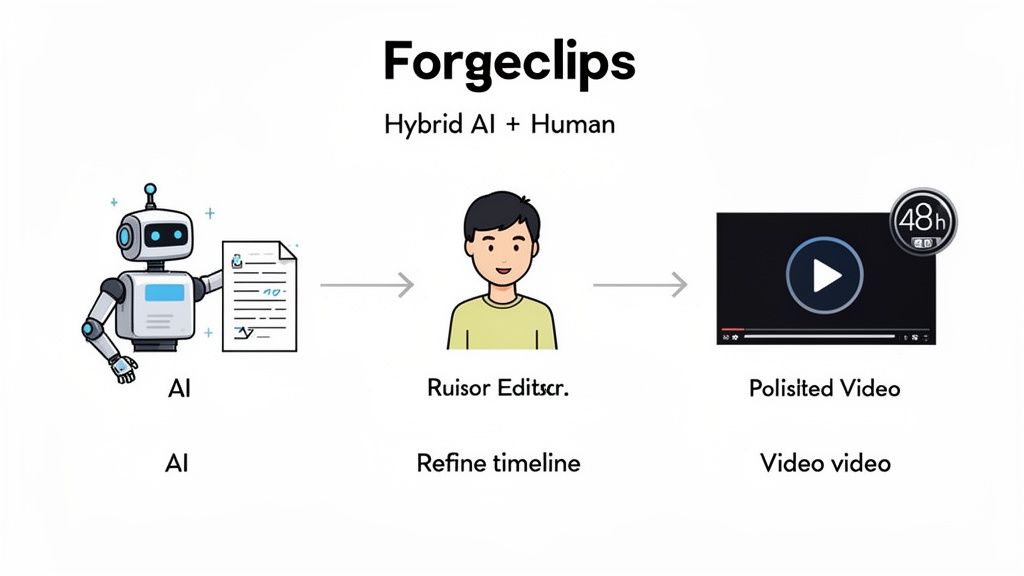
That's the entire philosophy behind Forgeclips. It's not just another service. It's the system we built to bridge the gap—a structure-first approach that gives you the strategic clarity of an agency at the speed and cost a SaaS startup can actually afford.
The Hybrid Production Pipeline
To fix the endless timelines and bloated costs, we had to rethink the entire workflow. What we landed on is a hybrid pipeline that smartly blends machine efficiency with human expertise. It’s not about letting AI run wild. It’s about using it for the right tasks.
AI-Accelerated Scripting & Voice-Over: We use AI to blast through the initial scripting phase and generate clean, professional voice-overs from text. This alone turns days of tedious back-and-forth into minutes.
Human-Powered Editing & Polish: An AI can’t spot the nuance in your UI or know which "aha!" moment will make a user convert. That’s where our human editors come in. They take the raw assets and apply strategic polish—perfecting the timing, adding zooms for clarity, and making sure every single frame tells your story.
This combination gives you the best of both worlds: the raw speed of automation paired with the studio-grade quality that only comes from a professional editor who actually understands software.
Frameworks Designed for SaaS Use Cases
Our video frameworks aren't generic templates. They are proven storytelling structures, each designed for a specific job your SaaS needs done. We built them from years of experience in both software development and video marketing.
We start with the end goal—whether it's driving trial sign-ups or reducing support tickets—and work backward. The structure of the video is engineered to produce that specific outcome.
This means if you need a product demo, you get a framework built to showcase value, not just a random tour of features. If you need a quick feature highlight, the framework is designed for immediate impact. This is exactly how we deliver polished, effective videos in as little as 48 hours.
It’s also important to know how this fits into the broader market. While there are many great AI video clipping tools like Opus Clip, our focus is different. We lean on a hybrid model that puts narrative clarity first—a critical distinction when you’re trying to sell complex software.
Solving the Core Problems of Time and Cost
At the end of the day, this system is all about performance. It’s for founders and product marketers who need a reliable way to get high-quality videos without derailing their roadmap or blowing their budget.
What This System Delivers:
Speed Without Sacrificing Quality: Get polished, multi-format videos ready for launch in days, not weeks or months.
Predictable, Affordable Costs: No more mystery invoices. Our model is built for the financial realities of a growing SaaS company.
Clarity That Converts: Videos that are clean, direct, and focused on communicating value—the only thing that actually moves the needle.
We built Forgeclips because we lived the frustration of the old way. This is a system built by a team that gets both the code and the creative. You can see the full breakdown by exploring how the Forgeclips system works. It’s the structured solution for SaaS companies tired of the chaos.
Answering the Tough Questions About SaaS Video
Strategy is one thing, but execution is another. These are the real-world uncertainties we hear from founders and marketers every day—the nagging details that can stall an entire video project.
Let's cut through the noise with some direct, experience-based answers.
What Is the Ideal Length for a SaaS Demo Video?
The ideal length for a SaaS demo is as short as possible, but no shorter. Your video is done when it secures that "aha!" moment and drives the user to the next step. Every second that doesn't serve that purpose should be cut.
Think about the viewer's context:
Landing Page & Promo Videos: Stick to 60-90 seconds. This is the sweet spot for grabbing attention, defining a clear pain point, and proving your value before you lose them.
Detailed Feature & Onboarding Videos: These can run longer, typically 2-5 minutes. Here, the viewer is already bought in. They’re looking for thorough guidance, not a quick pitch.
The real metric isn’t runtime; it’s “time to value.”
Should I Use a Human Voice-Over or an AI Voice?
For most SaaS product demos and tutorials, a high-quality AI voice is the smarter choice. While a professional human voice actor brings an emotional depth, the benefits are often marginal compared to the massive gains in speed, cost, and editing flexibility that modern AI voices provide.
Here's a quick comparison:
AI Voice: Instant turnaround, a fraction of the cost, and you can regenerate audio for script changes in minutes.
Human Voice-Over: Can take days to schedule and record, is significantly more expensive, and even minor script edits require a new session and invoice.
Save the human voice-over for high-stakes brand videos where emotional connection is the primary goal. For clear, efficient product communication, AI wins.
Can I Make a Great Video Without Showing My Face?
Yes, and for most SaaS videos, you absolutely should. Unless you are the brand (like a well-known founder), a talking head is usually a distraction. The goal is to get users to picture themselves using your software, not to watch you talk about it.
Your product is the hero of the story. A polished screen recording, guided by crisp narration and strategic zooms, is far more effective at immersing the viewer in your UI. Let the software's value speak for itself.
How Much Should I Budget for a SaaS Explainer Video?
Instead of asking what a video costs, ask what it costs not to have one. A framework-driven system offers the sweet spot between the DIY trap (low cost, poor result) and the agency drain (high cost, slow timeline). The budget should be viewed as a strategic investment in an asset that drives revenue, not as a creative expense. You get a far more polished and effective asset than you could create yourself without the massive overhead of a traditional agency.
How Often Should I Update My Product Videos?
Product videos should be updated as soon as the UI or workflow they depict becomes outdated. They are living documents, not static assets. An outdated video erodes trust and creates user confusion.
Here’s a practical schedule:
High-Level Explainer & Promo Videos: Update every 12-18 months or after a major UI overhaul.
Feature Walkthrough & Onboarding Videos: Review and re-record with every significant release that changes a key workflow.
This is exactly why having a fast, repeatable production system is so crucial. When you can push updates in days instead of months, keeping your video library in sync with your product becomes a manageable process.
Feeling overwhelmed by the idea of creating videos that actually convert? Don't be. Forgeclips was built to replace the slow agencies and messy DIY process with a structured, framework-based approach. We deliver high-performing SaaS demos and promos fast, so you can focus on building your product. See how our system works.